
UX STRATEGY • PRODUCT DESIGN
Research. Strategy. Systems Design. AI.
I design products that help people understand and trust systems they can't fully see — from machine vision overlays to GPS-connected hardware. That's been my work for over two decades. AI just made it more interesting. (See how I'm integrating AI into my design process.)

Machine Vision

Wearable

AI • AGEnts
23
YEARS EXPERIENCE
3
TECHNOLOGY COMPANIES
Multiple
PATENTS FILED/GRANTED
01
Selected Work
Case Studies

Global Trend Engine
Designer & Builder
•
Self-Initiated
•
1 week
→
An agentic AI dashboard where three agents — a multi-persona scanner, Nostradamus, and Tarot — scan the web for frontier signals, synthesize patterns, and generate predictive convergence insights — designed, built, and deployed with Claude.
Lytx Video Overlay
Senior UX Designer
•
Lytx
•
4 months
→
A dynamic video overlay that simplifies customer coaching conversations, improving user trust, and reducing contention rate to near zero.

Lytx Driver ID
Senior UX Designer
•
Lytx
•
3 months
→
A systematic user flow for assignment, distribution, and usage of QR codes to assign drivers to vehicles.
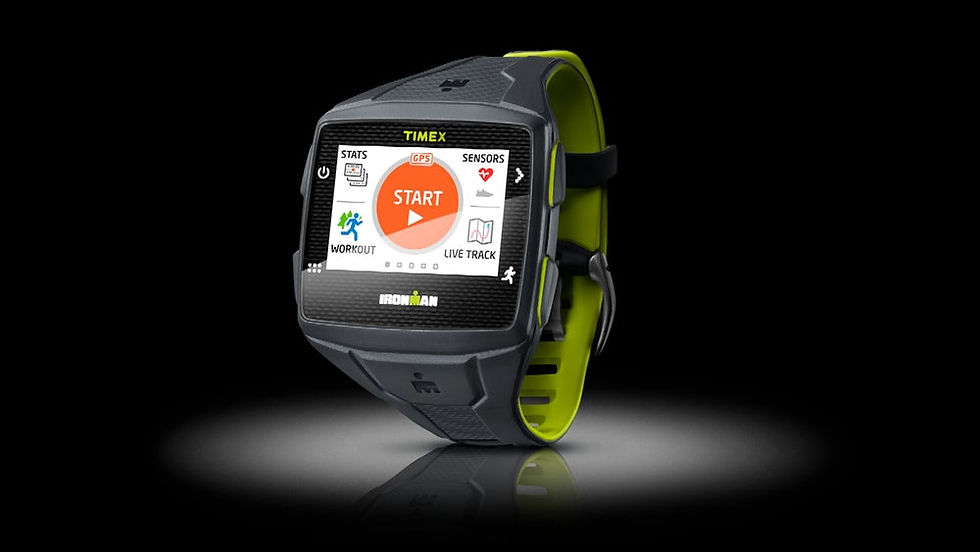
Timex Ironman ONE GPS+
UX Design Lead
•
Qualcomm / Timex
•
3 years
→
A full 0-to-1 product experience for athletes who wanted to track workouts, stay connected, and leave their phones behind.

Tagg the Pet Tracker
UX Design & Product Management
•
Qualcomm
•
1.5 years
→
Redesign of a pet activity monitoring and management of iOS/Android app development as both UX lead and product manager.

FLO TV Personal Television
UX Design Lead
•
Qualcomm / FLO TV
•
1 year
→
Designing a new product category from the ground up: live mobile television.
02
Expertise
Skills
User Research
Interviews, usability tests, ethnographic study, and contextual inquiry
Journey Mapping
End-to-end experience mapping across touchpoints
Interaction Design
Flows, wireframes, use cases, and high-fidelity mockups
Storytelling
Communicating design decisions to executives and cross-functional teams
Systems Thinking
Mapping connected flows and designing for scalability across surfaces
Prototyping
From low-fi click-throughs to high-fidelity AI coding
AI Fluency
Designing AI-powered experiences and using AI tools in the design process
Stakeholder Management
Cross-functional collaboration and design advocacy
Tools
Claude (Design/Code)
Research synthesis, design, prototyping, and documentation
Figma
Components, variants, auto-layout, and prototyping
Sketch
Vector UI design for components and high-fidelity screens
Axure RP
High-fidelity prototyping with conditional logic
Pendo
In-app guidance, feature tracking, and user surveys
Amplitude
Funnels, retention, and feature-adoption analysis
Dovetail
Centralized research insights and customer intelligence
Atlassian (Confluence/Jira)
Confluence for design documentation; Jira for planning and cross-functional tracking
03
Background
Experience & Education
2019 - Present
Senior Product Designer
Lytx • San Diego, CA
Research and design of user experience for video-safety and AI products, and development of an AI-native design process for the Product/UX team.
2007 - 2018
Sr. Staff UX Designer & Sr. Product Manager
Qualcomm • San Diego, CA
Led 0-to-1 UX and product development for large-scale product start-ups while managing 3rd-party design teams.
2003 - 2007
UI Designer
Nokia • San Diego, CA
Designed new phone features while serving as the only North American member of Nokia's global design-management team.
1998 - 2002
B.S. Symbolic Systems
Stanford University • Stanford, CA
Interdisciplinary study of computer science, linguistics, philosophy, and psychology with a concentration in human-computer interaction.
My Résumé
Name
Daniel Rivas
current role
Senior Product Designer
Location
San Diego, CA
Availability


Daily Futurology Report
October 18, 2026 at 12:39:19 AM
Model:
Opus 4.8
Forecast:
2026–2028
The Capability–Substrate Gap: AI's Frontier Laps the Physical and Civic Systems It Runs On
Here's the bet for 2026–2028: the thing that decides who wins the AI build-out isn't model quality anymore. It's whoever can actually switch the stuff on. The capability is close to a commodity now — three frontier-class models landed in a single week. The scarce thing is substrate: megawatts you can deliver, chips you can keep in the right country, trials that clear, trust you can rebuild.
The evidence is already stacked. Data-center demand in ERCOT alone is projected to nearly double this year, and clean supply isn't getting built fast enough to match it — so the constraint moves from "can we train it" to "can we power it." Taiwan criminalizing AI-chip diversion, and TSMC pledging $250 billion into US fabs under the new trade deal, is the same logic in silicon: compute became a thing you fight over, not just a thing you buy.
I'd expect the next two years to reward the unglamorous players — the ones holding interconnection-queue slots, firm power contracts, fab capacity, and clean clinical data. The headlines will keep going to the models. The margins will quietly go to whoever owns the bottleneck. And watch climate here, because it's the one clock nobody can reschedule: the adaptation pivot in this year's report tells you the lag already won part of the argument.
Worth holding this loosely, though. I've been wrong betting against software before — a real jump in energy density, or an agent that designs its own power-efficient hardware, could collapse the substrate problem faster than I think. And "frontier models are commoditized" is the kind of thing people say right before the next one isn't. So: strong lean, not a certainty. The gap is real today. Whether it stays the binding constraint through 2028 is the part I'd keep checking.
Cross-Domain Synthesis
Here's the thing that jumps out this week. The AI frontier moved again — Google's Gemini 4 Argon, Meta's first frontier models (Muse Wonder), OpenAI's always-on "Dots" agents that keep working between your conversations. Software time. The frontier runs on it. Then you look at everything the frontier actually needs to happen, and almost none of it runs on software time.
Energy is the clearest case. US grids are set to add about 90 gigawatts this year, mostly solar and storage, and data centers are eating that growth faster than anyone's building it — ERCOT data-center demand alone is projected to roughly double, from about 2.2 GW to 4 GW. The nuclear-for-AI story everyone's selling? A single small modular reactor is under 300 megawatts, and most of them aren't switched on yet. Chips tell the same story — Taiwan's about to put AI servers on a criminal-penalty export list, because a corridor you can't secure isn't one you can bill for. And space: Starship reached orbit in September, then NASA quietly moved the actual Moon landing to Artemis IV in 2028, because you can't land until you can refuel in orbit, and nobody's done that yet.
Even the slow, careful domains are lining up behind the same tension. CRISPR is finally going in-vivo for heart disease — CTX320 knocked a lipoprotein target down as much as 73% in dose escalation — but that's a trial timeline, measured in years, not release cycles. Climate's on its own clock entirely: record CO2, methane and nitrous oxide this year, the first tipping point apparently crossed, and the 2026 State of the Climate report's new advice is basically keep cutting, but start adapting, because the lag already baked some of this in.
And the people? They're not buying the timeline. 83% of US adults now expect AI to eliminate more jobs than it creates, trust in AI-answered news sits at 20%, and workplace loneliness is climbing right alongside AI adoption. So the frontier is sprinting and the ground it runs on — power, silicon, trial data, orbital fuel, public trust — is walking. That gap is the actual story.
05
Horizon: Predictive convergence
Futurology Report — Daily
October 18, 2026 at 12:39:19 AM
AI Model:
Opus 4.8
Forecast:
2026–2028
The Capability–Substrate Gap: AI's Frontier Laps the Physical and Civic Systems It Runs On
Here's the bet for 2026–2028: the thing that decides who wins the AI build-out isn't model quality anymore. It's whoever can actually switch the stuff on. The capability is close to a commodity now — three frontier-class models landed in a single week. The scarce thing is substrate: megawatts you can deliver, chips you can keep in the right country, trials that clear, trust you can rebuild.
The evidence is already stacked. Data-center demand in ERCOT alone is projected to nearly double this year, and clean supply isn't getting built fast enough to match it — so the constraint moves from "can we train it" to "can we power it." Taiwan criminalizing AI-chip diversion, and TSMC pledging $250 billion into US fabs under the new trade deal, is the same logic in silicon: compute became a thing you fight over, not just a thing you buy.
I'd expect the next two years to reward the unglamorous players — the ones holding interconnection-queue slots, firm power contracts, fab capacity, and clean clinical data. The headlines will keep going to the models. The margins will quietly go to whoever owns the bottleneck. And watch climate here, because it's the one clock nobody can reschedule: the adaptation pivot in this year's report tells you the lag already won part of the argument.
Worth holding this loosely, though. I've been wrong betting against software before — a real jump in energy density, or an agent that designs its own power-efficient hardware, could collapse the substrate problem faster than I think. And "frontier models are commoditized" is the kind of thing people say right before the next one isn't. So: strong lean, not a certainty. The gap is real today. Whether it stays the binding constraint through 2028 is the part I'd keep checking.
Signal Intensity
A domain-level score (0-100) representing the volume and momentum of frontier activity detected across the signals in that domain.
AI
95
%
Climate
82
%
BIOTECH
74
%
GEOPOLITICS
88
%
ENERGY
86
%
SOCIETY
78
%
SPACE
70
%
Cross-Domain Synthesis
Here's the thing that jumps out this week. The AI frontier moved again — Google's Gemini 4 Argon, Meta's first frontier models (Muse Wonder), OpenAI's always-on "Dots" agents that keep working between your conversations. Software time. The frontier runs on it. Then you look at everything the frontier actually needs to happen, and almost none of it runs on software time.
Energy is the clearest case. US grids are set to add about 90 gigawatts this year, mostly solar and storage, and data centers are eating that growth faster than anyone's building it — ERCOT data-center demand alone is projected to roughly double, from about 2.2 GW to 4 GW. The nuclear-for-AI story everyone's selling? A single small modular reactor is under 300 megawatts, and most of them aren't switched on yet. Chips tell the same story — Taiwan's about to put AI servers on a criminal-penalty export list, because a corridor you can't secure isn't one you can bill for. And space: Starship reached orbit in September, then NASA quietly moved the actual Moon landing to Artemis IV in 2028, because you can't land until you can refuel in orbit, and nobody's done that yet.
Even the slow, careful domains are lining up behind the same tension. CRISPR is finally going in-vivo for heart disease — CTX320 knocked a lipoprotein target down as much as 73% in dose escalation — but that's a trial timeline, measured in years, not release cycles. Climate's on its own clock entirely: record CO2, methane and nitrous oxide this year, the first tipping point apparently crossed, and the 2026 State of the Climate report's new advice is basically keep cutting, but start adapting, because the lag already baked some of this in.
And the people? They're not buying the timeline. 83% of US adults now expect AI to eliminate more jobs than it creates, trust in AI-answered news sits at 20%, and workplace loneliness is climbing right alongside AI adoption. So the frontier is sprinting and the ground it runs on — power, silicon, trial data, orbital fuel, public trust — is walking. That gap is the actual story.
ABOUT ME
Design Philosophy
I bring order to complexity; I've spent over two decades building the tools to do it well.
My path started at Stanford, where a degree in Symbolic Systems gave me something most designers don't have: a foundation that spans both sides of the human-computer divide. From the technical rigor of computer science and formal logic, to the human depth of cognitive psychology and knowledge representation, I learned to hold both perspectives at once and to design from the intersection.
That training became practice at Nokia, Qualcomm, and now Lytx, companies where the problems are large, the systems are complex, and the stakes are real. I've learned that the most important design decisions rarely live on a single screen. They live in the architecture, the mental models, the moments where a user either trusts the product or doesn't.
What drives me today is the challenge of making emerging technology feel human and trustworthy. AI systems can process the world faster than any person, but they still need to communicate their reasoning, surface the right information at the right moment, and earn the confidence of the people who depend on them. That translation problem, from machine intelligence to human understanding, is exactly the kind of complexity I've been working on.


Systems before screens
Every interface is a surface on top of a system. Understanding the system (the data flows, the user mental models, the organizational constraints) is what separates design that scales from design that just looks good in a mockup.

Strategy and execution, not one or the other
I connect design decisions to business outcomes. That means being in the room when strategy is set, not just when wireframes need approval. It means being able to move between the 30,000-foot view and the pixel-level detail without losing either.

Trustworthy by design
The best technology earns trust before it demands it. Whether I'm designing a safety-critical AI product or the home screen on a fitness watch, I start with the question: what does this person need to feel confident taking action?
EDUCATION
B.S. Symbolic Systems
Stanford University
Concentration in HCI
BASED IN
San Diego, CA
CURRENTLY
Senior Product Designer
Lytx
OPEN TO OPPORTUNITIES
Principal/Senior-Level Product Design Roles
In San Diego or Remote
SELECTED WORK
Case Studies
EXPERTISE
Skills

User Research
Interviews, usability tests, ethnographic study, and contextual inquiry

Journey Mapping
End-to-end experience mapping across touchpoints

Interaction Design
Flows, wireframes, use cases, and high-fidelity mockups

Storytelling
Communicating design decisions to executives, stakeholders, and cross-functional teams

Systems Thinking
Mapping connected flows and designing for scalability across product surfaces

Prototyping
Interactive prototypes from low-fi click-throughs to high-fidelity AI coding

AI Fluency
Designing AI-powered experiences and leveraging AI tools in the design process

Stakeholder Management
Cross-functional collaboration and design advocacy
Tools

Pendo
In-app guidance, feature tracking, and user surveys to inform design decisions

Dovetail
Centralized research insights, tagged findings, and shared customer intelligence repository

Figma
Components, variants, auto-layout, and prototyping

Claude (Design & Code)
AI-assisted research synthesis, design critique, content generation, and prototyping

Amplitude
Product funnels, retention curves, and feature adoption to identify usage and priorities

Gong
Customer interview repository for surfacing pain points, testing designs, and grounding decisions

Sketch
Vector-based UI design for components, wireframes, and high-fidelity screens

Axure RP
High-fidelity interactive prototyping with conditional logic and complex flows

Cursor
AI-assisted coding for rapid prototyping and exploring technical feasibility
BACKGROUND
Experience & Education
Senior Product Designer
Lytx · San Diego, CA
Researched and designed user experience for video safety and AI products, and developed an AI-native design process for the UX team.
tagsContainer
2019 - Present
Sr. Staff UX Designer & Sr. Product Manager
Qualcomm · San Diego, CA
Led 0-to-1 UX and product development for large-scale product start-ups while managing 3rd-party design teams.
tagsContainer
2007 - 2018
UI Designer
Nokia · San Diego, CA
Designed new phone features while serving as the only North American member of Nokia's global design management team.
tagsContainer
2003 - 2007
B.S. Symbolic Systems
Completed interdisciplinary study of computer science, linguistics, philosophy, and psychology with a concentration in human-computer interaction.
tagsContainer
1998 - 2002
My Résumé
A full overview of my experience, skills, and education — ready to share.
NAME
Daniel Rivas
CURRENT ROLE
Senior Product Designer
LOCATION
San Diego, CA
EXPERIENCE
23 years
AVAILABILITY


✦ Human · Machine · Intelligence ✦ Systems before screens ✦ Strategy & execution ✦ Trustworthy by design ✦
Design Philosophy
06
ABOUT ME
I bring order to complexity; I've spent over two decades building the tools to do it well.
My path started at Stanford, where a degree in Symbolic Systems gave me something most designers don't have: a foundation that spans both sides of the human-computer divide. From the technical rigor of computer science and formal logic, to the human depth of cognitive psychology and knowledge representation, I learned to hold both perspectives at once and to design from the intersection.
That training became practice at Nokia, Qualcomm, and now Lytx, companies where the problems are large, the systems are complex, and the stakes are real. I've learned that the most important design decisions rarely live on a single screen. They live in the architecture, the mental models, the moments where a user either trusts the product or doesn't.
What drives me today is the challenge of making emerging technology feel human and trustworthy. AI systems can process the world faster than any person, but they still need to communicate their reasoning, surface the right information at the right moment, and earn the confidence of the people who depend on them. That translation problem, from machine intelligence to human understanding, is exactly the kind of complexity I've been working on.
The surface
The Model
Every interface is a surface on top of a system.
The screen is the visible tip. The decisions that make a product trustworthy live underneath it — in the flows, the mental models, the constraints. That's where I start.
Screen / Interface
What the user sees
User mental models & needs
01
Interaction & info architecture
02
Data flows & system states
03
Organizational constraints
04
↓ Where the design decisions live
A
Systems before screens
Every interface is a surface on top of a system. Understanding the data flows, mental models, and organizational constraints is what separates design that scales from design that just looks good in a mockup.
B
Strategy and execution
I connect design decisions to business outcomes — being in the room when strategy is set, moving between the 30,000-foot view and the pixel-level detail without losing either.
C
Trustworthy by design
The best technology earns trust before it demands it. Whether a safety-critical AI product or a fitness-watch home screen, I start with: what does this person need to feel confident taking action?
Education
B.S. Symbolic Systems
Stanford University • Concentration in HCI
Based In
San Diego, CA
Available for remote
Currently
Senior Product Designer
Lytx, Inc.
Open To
Principal / Lead / Senior roles
San Diego or remote
07
Contact
Have a project in mind?
I'm open to new full-time opportunities, collaborations, and interesting conversations.
Phone
Daniel Rivas · UX Strategy & Product Design
© 2026